🧠 Learning to Fight Back
My Life After AD Diagnosis

You can’t stop the waves, but you can learn to surf."
— Jon Kabat-Zinn"Once you stop learning, you start dying."
— Albert Einstein
A few months ago, I was diagnosed with early-stage Alzheimer’s.
Let me tell you, that news hits like a freight train. You freeze. Your mind races. You imagine the worst-case scenario because, well, it’s the only scenario most people ever talk about.
But something unexpected happened after that diagnosis: I found hope.
Yes, really—hope.
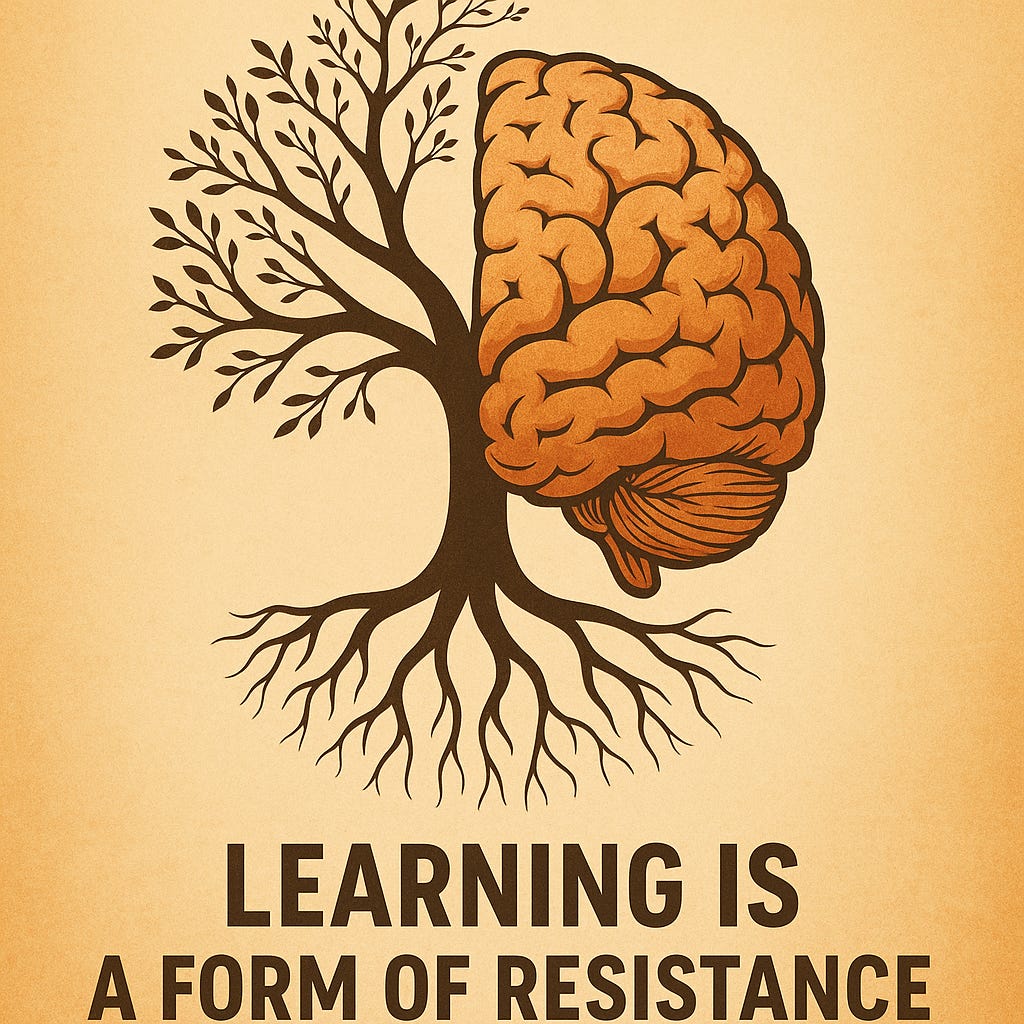
It didn’t come in the form of a magic pill or a TED Talk. It came from a growing body of research showing that Alzheimer’s doesn’t have to be a slow march into darkness. That learning—plain old, brain-challenging, curiosity-fueled learning—might help the brain fight back.
The Brain, Rewired
The brain, it turns out, is a bit like a muscle. Challenge it, and it strengthens. Rest it, and it weakens. Scientists call this “cognitive reserve,” and it’s why two people can have similar brain scans—one showing signs of Alzheimer’s—and yet function completely differently.
The difference? One of them kept learning.
Studies from places like Harvard and the University of California have shown that people who remain mentally active—who engage in lifelong learning, complex problem-solving, reading, language, even good old-fashioned conversation—can stave off cognitive decline. In fact, a 2023 study in the Journal of the Alzheimer’s Association found that people who kept learning experienced slower rates of decline, even when the disease was physically present in their brains.
Learning Is My Medicine, Too
So I’ve started treating learning like medicine. Daily doses.
Crossword puzzles. Books I wouldn’t have touched before. Writing down memories before they slip away. Having deeper conversations. Laughing more. Listening harder.
I’m also on two new Alzheimer’s drugs—lecanemab and donanemab. They’re showing promise in slowing the buildup of amyloid plaques in the brain. But here’s the kicker: they work best when paired with mental stimulation.
So yes, I’m on the meds. But I’m also doing the work. And I feel more present than I have in months.
Meet MiM—Memory in Motion
Here’s where it gets personal (as if this wasn’t already).
My wife Vanessa—who I like to describe as a cross between Marie Curie and a hurricane—took one look at the sad state of support for people like me and said, “Nope. Not good enough.”
And then she did something about it.
She created MiM—short for Memory in Motion—a new app (and soon-to-be nonprofit foundation) designed to help people in the early stages of Alzheimer’s live with more independence, structure, joy, and yes, learning.
I’ve been the unofficial beta tester—the hamster in the wheel, so to speak—and MiM has quite literally gotten me writing again. It’s reawakened my curiosity. It’s made me believe that I’m not just living with this disease… I’m fighting it.
Vanessa’s already met with attorneys, built a leadership plan, and connected with the Regional Director of the Alzheimer’s Association. She’s taking this all the way. And I’m with her every step of the way—even when my steps are a little slower.
This Isn’t Over
Alzheimer’s wants you to feel powerless. I don’t.
Not today.
I’ve got books to read. People to talk to. A brain to challenge. A wife building a movement. And a lot more life to live.
We may not have a cure. But we do have tools.
Let’s use them.
If you know someone newly diagnosed, or someone who loves someone who is—share this.
MiM is coming. And hope is real.
I love your positive attitude and reaching out to help others as you help yourself. Vanessa is your staunch support system and her jumping into the MIM endeavor is incredible, although I expect nothing less from her. I know this is going to make a difference because “no” just isn’t happening. I am cheering both of you on from the sidelines and am so excited for the catalyst you have become. Vanessa is truly a visionary with velocity. ❤️